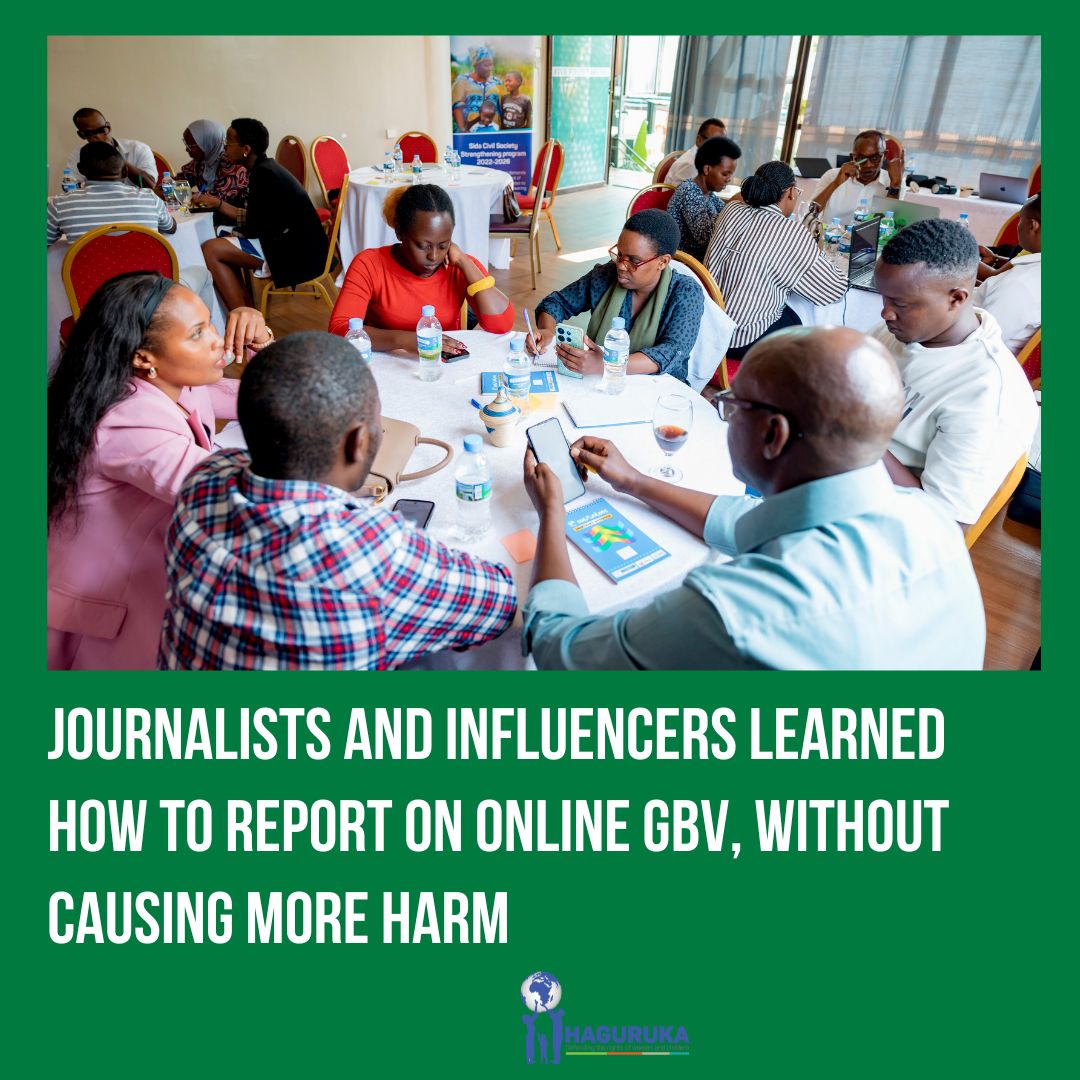
WHEN THE ABUSE FOLLOWS YOU HOME : Journalists and Influencers learned how to report on online GBV, without causing more harm
The screenshot arrives at midnight. A girl’s face, lifted from her social media, pasted onto a naked body she has never seen. By morning, it has been shared 200 times. By noon, her phone will not stop buzzing. By evening, she has deleted every account she owns.
This is technology-facilitated gender-based violence (TFGBV). And in Rwanda, a growing number of journalists and influencers are learning how to cover it, without becoming part of the harm.
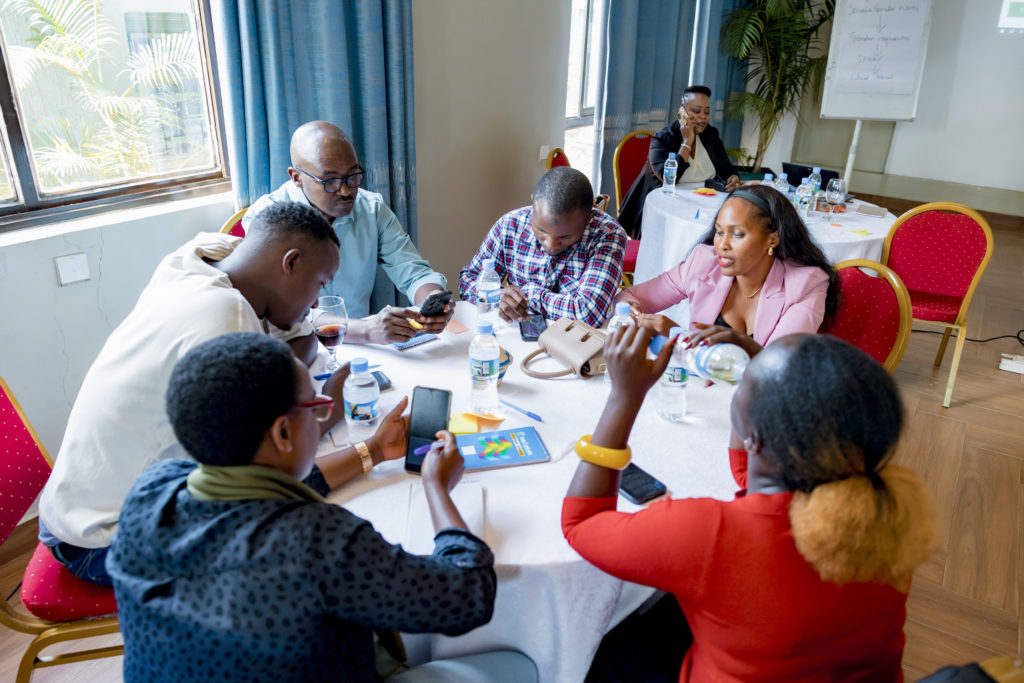
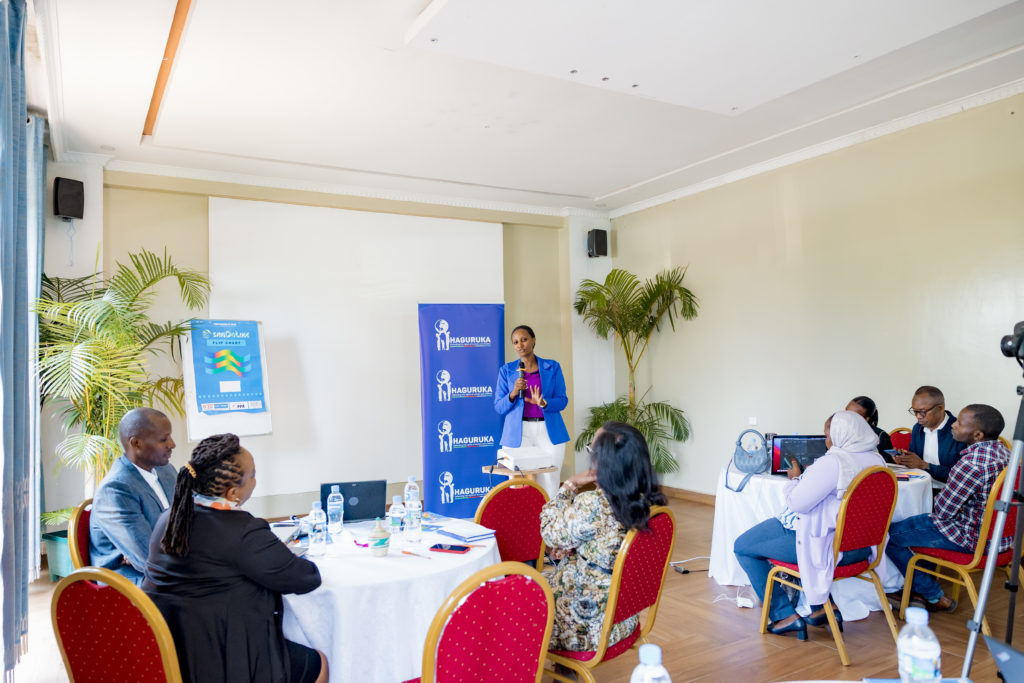
In 2025, Haguruka, brought together reporters and social media creators for an intensive training on TFGBV. The topics were not theoretical: cyberbullying, online grooming, deepfakes, sextortion. The questions were not easy. How do you report on a child’s abuse without exposing that child again? When does public awareness cross into public spectacle?
“Our role is to inform, not harm”
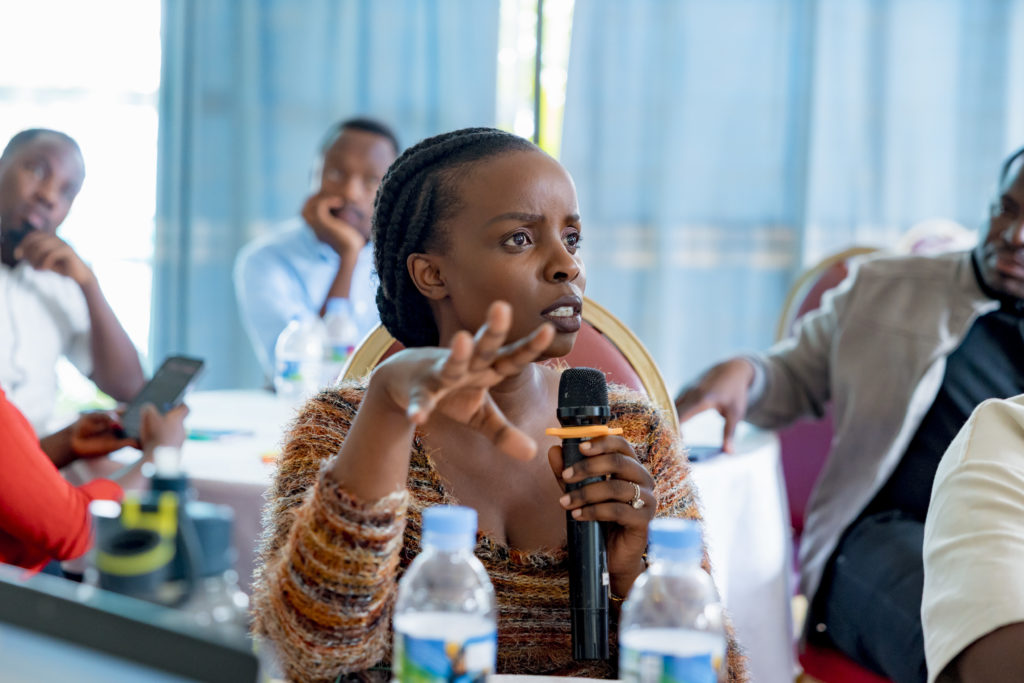 Cyuzuzo Jean Darc speaking at Haguruka’s TFGBV training.
“Protecting the dignity of children while addressing sensitive issues is essential,” she told the group. “Our role is to inform, educate, and advocate, without causing harm or stigma.”
The journalists nodded. Some had covered cases where a victim’s name slipped through. Some had read headlines from other countries, sensational, exploitative, retraumatising, and wondered if they had ever come close to that line.
Editor Mutuyeyezu Oswald spoke next. “Media practitioners must stay informed about best practices in child protection and digital safety,” he said. “We influence how society understands and responds to these issues.”
Edith Nibakwe, a media figure in the room, warned against the kind of coverage that sells but destroys. “Journalists should prioritise the well-being of those affected,” she said, “and craft narratives that foster healing, awareness, and justice.”
She did not need to give examples. Everyone in the room had seen them. A headline that names a victim. A photo that identifies a school.
 Mutesi Scovia, Chairperson of RMC Rwanda, put it simply: “Empathy, accuracy, and respect are essential to safeguarding children and vulnerable groups in digital spaces.”
Phoibe Mukandayisenga left the training with a commitment. “I will actively promote awareness and safety within my community, school, and church,” she said. “Leading by example to uphold dignity and respect.”
Rameck Gisanintwari had a more specific plan. “I can help fight TFGBV by raising awareness through educational posts about doxxing and cyberstalking,” he said. “Sharing knowledge empowers people to recognize and respond.”
Ishimwe Solange added her voice last. “I stand against TFGBV because it harms our dignity, safety, and equality,” she said. “Promoting respect and awareness is my responsibility as an influencer.”
One voice was absent from the room in Kigali. Not because she was not invited. Because she is not ready to speak.
Somewhere in Rwanda, a victim of TFGBV is still deciding whether to come forward. Her screenshot has been shared. Her phone has buzzed. Her accounts are gone.
When she is ready, journalists and influencers trained by Haguruka will know how to tell her story, without becoming part of the harm.
That is the point of the training. Not to fix the problem overnight. But to be ready when she walks through the door.