
𝐈𝐍𝐆𝐎 𝐙’𝐀𝐌𝐀𝐇𝐎𝐑𝐎: 𝐇𝐎𝐖 𝐂𝐎𝐔𝐏𝐋𝐄𝐒 𝐑𝐄𝐖𝐑𝐎𝐓𝐄 𝐓𝐇𝐄𝐈𝐑 𝐒𝐓𝐎𝐑𝐈𝐄𝐒
Jean and Marie’s kitchen arguments could be heard three houses away. Money disappeared without discussion. Chores accumulated; resentment grew. After eight years of marriage in Gasabo District, they reached a crossroads: change or separate. Then came Ingo z’Amahoro’s Couples’ Dialogue sessions.
“At the first meeting, I sat with my arms crossed,” Jean admits. “I thought, ‘What can strangers teach me about my own marriage?’” But as facilitators guided couples through exercises on communication and shared decision-making, something changed. He listened as other husbands described struggles similar to his own. He heard wives, including Marie, express truths he had never truly listened to before.
“We make decisions together now. Not just about money, about everything”
The transformation was not immediate. Jean started with small steps: asking for Marie’s input before buying supplies for his motorcycle taxi, sharing evening duties with the children. Marie, long silenced by tradition and fear, began voicing her ideas, including a bold suggestion to pool resources with neighbouring couples.
That conversation led to their cooperative. Six couples now run a joint savings group and a small agricultural venture. Their combined income has doubled. More importantly, their partnership has become the foundation for everything else.
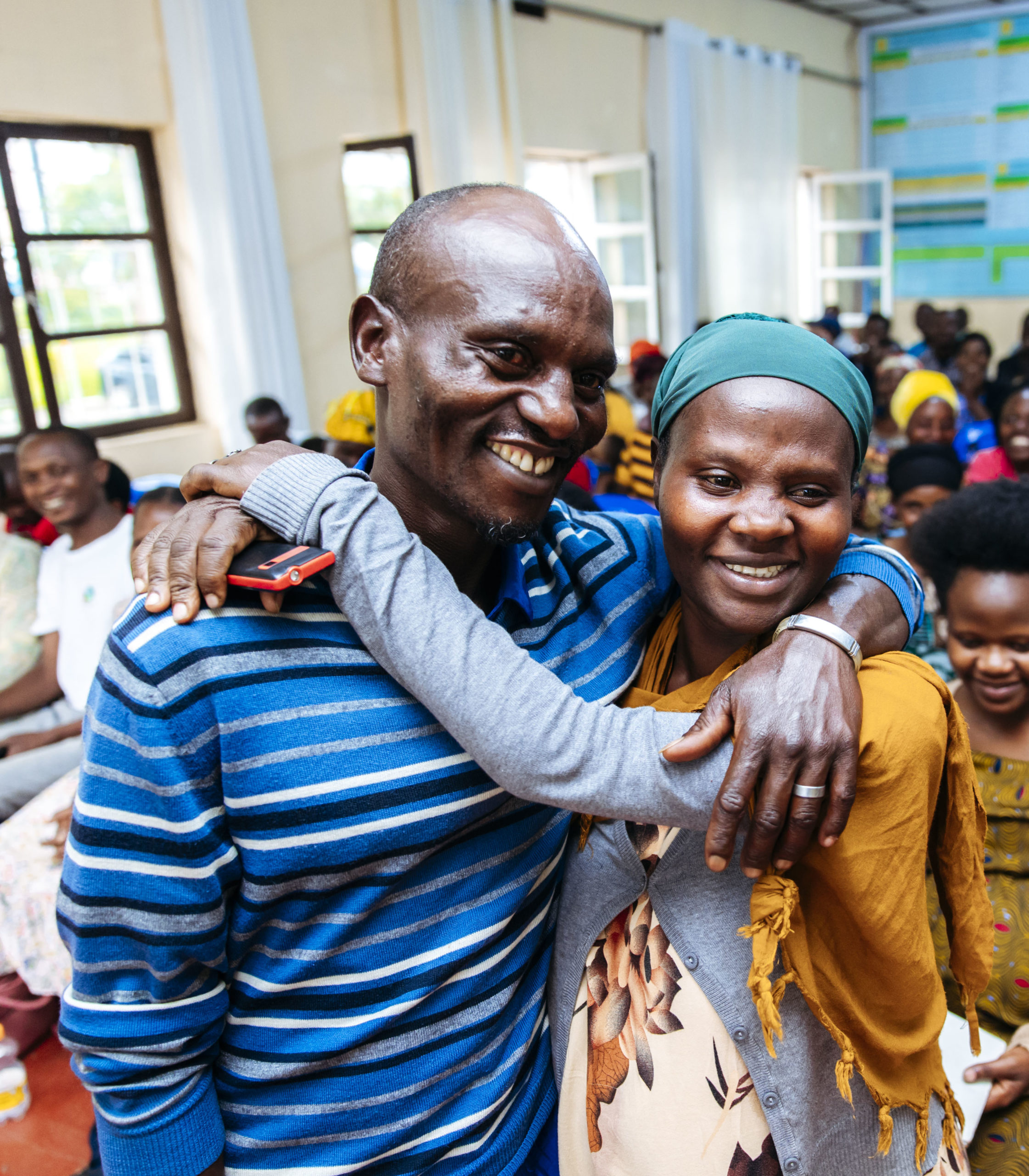
“We make decisions together now,” Marie says, standing beside Jean at their thriving vegetable stand. “Not just about money, about everything.”
Their neighbours noticed. Soon, other couples began asking questions and seeking advice. Jean and Marie became informal ambassadors for the programme—living proof that marriages can heal and thrive.
Seven Years of Change: By the Numbers
Since 2018, the Couples’ Dialogue approach under Ingo z’Amahoro has reshaped the relational, social, and economic fabric of families across Rwanda.
Through structured dialogue sessions, workshops, and guided reflection:
740 couples have experienced measurable change in their relationships. Fifteen cooperatives formed by programme graduates now operate in Musanze alone
Participating households report stronger communication skills, reduced conflict and violence, increased mutual respect, shared decision-making, and a deeper understanding of gender roles rooted in equality rather than hierarchy.
Men describe embracing more constructive forms of masculinity. Women report greater confidence in asserting their rights, voicing concerns, and participating actively in household decisions.
Economic and Social Empowerment
Dialogue has unlocked economic cooperation within households. Couples who once struggled to work together now jointly plan their finances, form savings groups, and engage in small cooperative ventures. These skills have strengthened household stability and, in several cases, lifted families out of extreme vulnerability.
Fifteen cooperatives formed by programme graduates in Musanze stand as living examples of how relational healing can translate into long-term economic growth.
Community-Level Transformation
The seven-year dialogue process has extended beyond individual households. Communities now foster a culture of accountability, where neighbours encourage peaceful conflict management and challenge harmful behaviours. Religious institutions and local leaders have become active partners, using their influence to reinforce positive change and prevent gender-based violence.
Healthy couples are becoming role models for others, spreading lessons of respect and equality throughout their neighbourhoods.
After seven years, the Couples’ Dialogue has proven that when communication heals the home, the whole society transforms.
Across Rwanda, Ingo z’Amahoro has reached thousands of couples, strengthening families and, by extension, entire communities. But statistics do not capture what truly matters: the quiet revolution taking place in kitchens and living rooms, where conversation replaces conflict and partnership replaces power struggles.