
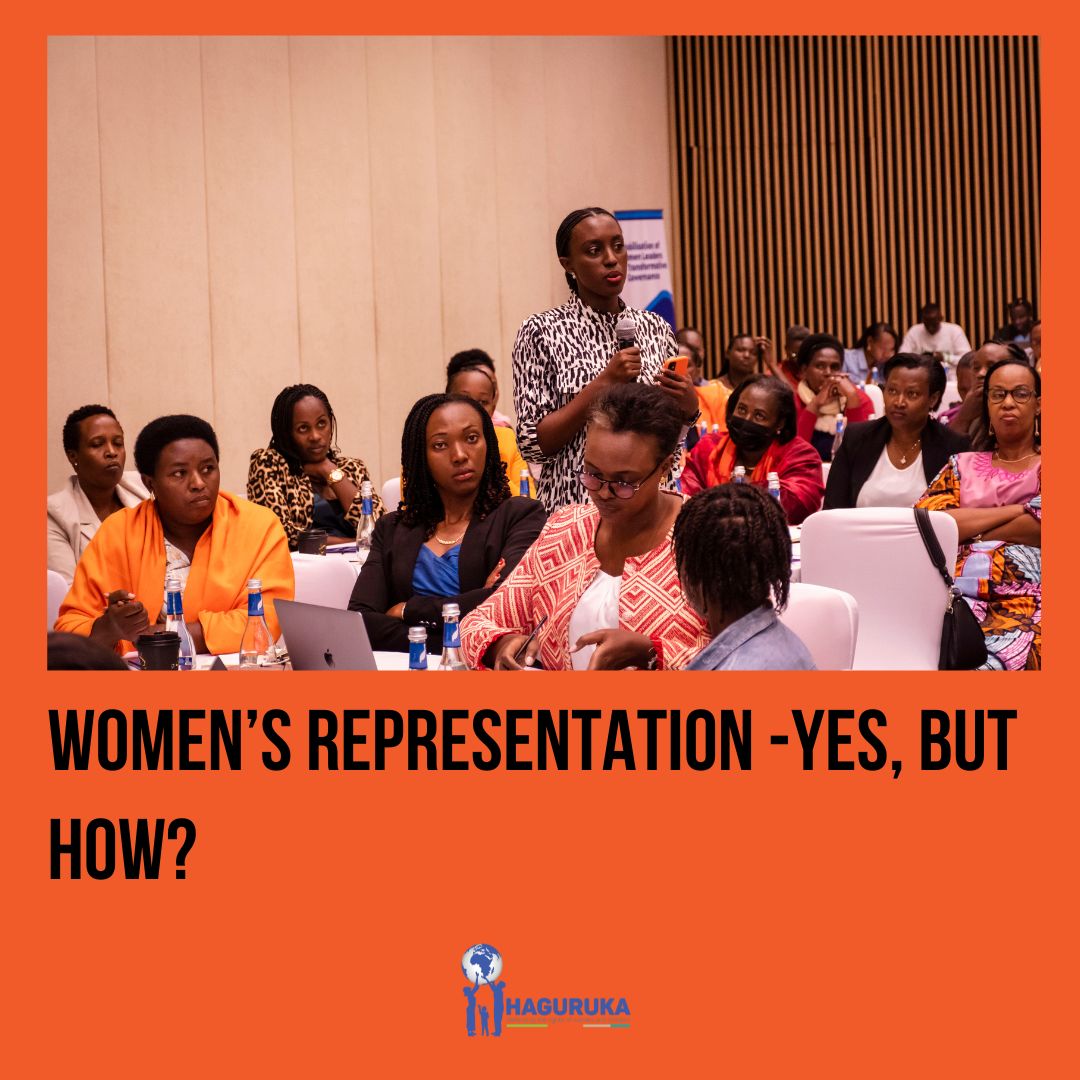
Although the constitution guarantees at least 30% representation, this minimum is often misinterpreted: focus group participants reported that the 30% quota is sometimes treated as a glass ceiling that limits women’s participation, and the system of reserved seats can discourage women from contesting against men. The problem is more pronounced at the local level: a Haguruka study attributes women’s under-representation in local government to a patriarchal mindset that reinforces gendered leadership roles. Many people assume women are best suited to social affairs or secretarial posts, while economic and other influential positions are seen as male domains. The statistics reflect this bias: 77.78% (21 of 27) of deputy district mayors for social affairs are women, compared with only 14.81% (4 of 27) for economic affairs. Overall, women hold 29.63% (8 of 27) of District Mayor positions – just below the constitutional minimum and far from the equal representation required by Article 9 of the Maputo Protocol.
The Burden of Home and Lack of Support
The roots of unequal political participation often lie at home. Haguruka’s consultative meetings found that women are less likely than men to receive spousal support for political careers. Some men resist change, fearing that an elected wife might become “more powerful at home” and alter family dynamics. Women also reported feeling obliged to obtain their spouse’s permission before running for office – an expectation rarely imposed on men. Traditional gender roles and unpaid care work further limit women’s ambitions. Disproportionate household duties – childcare, cooking, washing – consume large amounts of time, leaving many women unable to pursue leadership roles. Low self-confidence, possibly linked to a persistent gender gap in adult literacy (30.6% for females vs 22.5% for males in 2019), was also cited as a factor in lower female representation in some areas.
Leadership, care work and wellbeing
Barriers to women’s participation in leadership are not only structural; they are also emotional and psychological. The pressure of unpaid care work, fear of backlash, and harassment, both offline and online, can quietly erode confidence and wellbeing.
Practical support systems, shared care arrangements, mentorship, and safe reporting mechanisms help women sustain their engagement and avoid burnout. Recognising unpaid care work, including the mental and emotional load it carries, is essential for fairness at home and in public life.
The Call for Deeper Change
Haguruka builds capacity for more than 2,000 people each year, making it a leading voice for women’s and children’s rights in Rwanda. While commending the current framework, the organisation urges the Government of Rwanda to address persistent systemic challenges. Key recommendations include:
.Setting clear numerical targets in the National Gender Policy implementation plan to increase women’s participation in elective posts.
.Strengthening measures that address root causes – such as patriarchal attitudes and stereotypes – that limit women’s engagement at all levels.
Rwanda’s gains in national politics are impressive and widely recognised. Yet, as Haguruka’s report points out, true equality goes beyond legislative achievements: it requires breaking down subtle but powerful barriers embedded in cultural expectations, spousal support, and the division of labour. Achieving genuine political parity is like tending a complex garden: reserved plots can protect growth, but ongoing care is needed so that every plot can flourish and every plant can reach its potential.